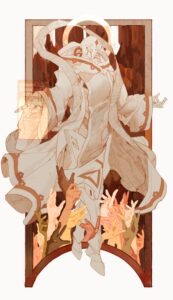
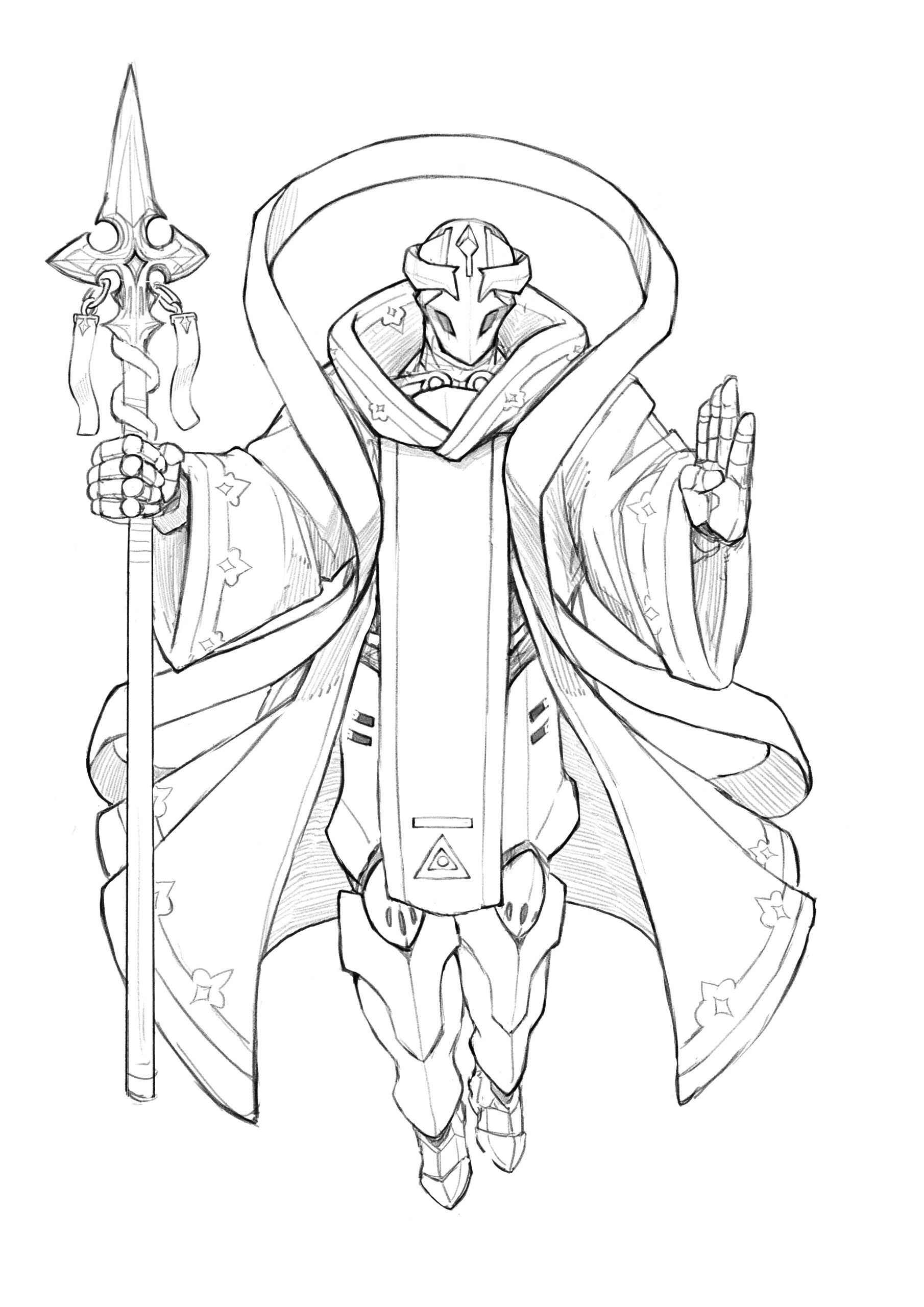
Ywn Ingulu is born to the tribal nobility of Ingulu, out upon the grand, swaying prairies of the planet Aithon.
The lad is intelligent, though he applies that wit solely for his own ends. Ywn shows no proclivity for learning—at least, not for knowledge that extends beyond the reach of his next meal or his next lover. While he is a popular fixture in his village, the elders view him as a slacker; he always seeks the easiest path to complete his work, showing little care for tradition or the “right” way of doing things.
Upon reaching adulthood, he strikes out on his own, never to look upon his parents again. His father raises him with the firm understanding that a man must depart from his kin and become his own individual. In a final act of honor to them, he takes his father’s advice and chooses to burden their house no longer.
He lives as a vagabond, trading his family’s honor for a life of grit, adventure, rough drugs, and quick romance. Soon, he finds himself working as a thief in the port city of Ba’kalu. It is here that he encounters the Hindu Chantry of Darshana—the very same sect that spreads across the Verses to create the various modern forms of the religion that own the majority of adherents today. This is a distinct departure from Rondi’s own Baharat, which Ywn himself comes to accept in the centuries to follow.
Eventually, he is caught in his antics and turned over by the town guard to the sect. It’s an unfortunate situation, but little does he know that this is what will enable him to become a legend of legends across the Omniverse. The Chantry immediately “does away” with the three minor fingers on each of his hands and “enrolls” him in the Darshana’s Sudra upbringing. Because he is not a local, speaks a dialect they consider “low,” and cannot prove the courtly manner of his upbringing, it is easy to see why he is looked upon with disdain among the elites of the Chantry.
Despite the role of castes in Hindu societies today, for Ywn—thousands of years ago—this existence is a cross between slave labor and solitary confinement. Only the sutras keep him company. He spends his days fumbling through mundane tasks with only his thumbs and index fingers, and his nights are spent alone in a cell.
His spirit flickers and dies for some months. It isn’t until he meets Dasya that he regains his fire of life. Dasya is a considerate Brahman-in-training who believes that one should uplift those of the lower castes. While this may seem like common reasoning these days, in Ywn’s time, it is considered borderline heretical by the interpretations of the sutras.
Ywn accepts Dasya’s secret tutoring in the hopes of becoming a servant-advisor—an increasingly popular court position. It is Dasya’s hope that, if Ywn can be taught the arts and details of civil engineering, he might serve one of the local kings and thus be seen as absolved of his dishonor. What follows is a regimen of learning for his very freedom.
Upon finding out about this arrangement, the chief Brahman has Ywn whipped for seven weeks. However, after a change of heart, he blesses the practice and sees to it that Ywn’s physical duties are removed in place of a tripled intellectual workload.
This is where the Ywn that we know is born. He grows up in the cell block, fueled by the guardsmen’s stories of what happens to prisoners who stay there too long: first, their bodies are broken, then their spirits, and finally, their minds. Ywn isn’t going to let himself waste away. With every piece of his being, he studies the technical sutras to learn the arts that benefit a king. Before long, a true curiosity of the world and its laws takes hold of him.
Education isn’t “fun.” It is laborious; it takes focus and effort that he doesn’t always feel like he has—but at the end of the day, he only needs to learn something one time. He begins to view the collective knowledge of the world as a checklist. He treats it as such, memorizing and executing stellarly on his tests.
He gains and expresses mastery of not just one subject to gain his freedom, but eight: city construction and planning, agriculture, siege and defense, methods of creating materials, military strategy, logistics, mercantilism, and finally, statecraft and courtly manners. Learning becomes a lifelong passion for him, something that, internally, he believes is tied to life itself.
Through his knowledge and dedication, he creates a plan to fend off a siege from an encroaching dragon-kin army. Then he fends off another, and then one final desperate assault, until the dragon armies decide these small kingdoms simply aren’t worth the effort. After all, there are a billion other marks across the Verses that they can pick.
Ywn wins his freedom from the appreciative kings of the land. The following night, he has a dream. Someone from another world needs his help: a beautiful sorceress named Rondi.
He sets out, eager to impress her, and the rest is history.